Chamber Guides
How to Verify an FDA-Cleared Hyperbaric Chamber
A practical guide to checking a hyperbaric chamber’s FDA clearance, model details, documentation, and the questions that still need a direct answer.
“FDA-cleared” is a phrase serious buyers often see before they have been shown the paperwork behind it. It is a meaningful starting point, but it is not a substitute for identifying the exact chamber, understanding the record, and confirming that the proposal in front of you matches the documentation. For a high-value equipment purchase, that extra care is not bureaucracy. It is how a buyer turns a broad claim into a fact they can use.
The practical question is not simply whether a company has ever appeared in an FDA database. It is whether the chamber and configuration being discussed can be tied to a clear record, appropriate instructions, and a credible ownership plan. This guide explains how to check that responsibly. It is about equipment due diligence, not medical advice, clinical approval, or a recommendation about treatment for any individual.
Start by separating clearance from a marketing promise
The FDA describes hyperbaric oxygen therapy devices as Class II medical devices that are cleared through the 510(k) process. In plain terms, a 510(k) clearance means the agency found a device substantially equivalent to a legally marketed predicate device for the use described in its clearance. It is not the same as an FDA endorsement of every advertising claim, a statement that every use is appropriate, or an assurance that a particular room and operating plan meet every requirement.
That distinction matters because a chamber listing, a treatment claim, and a personal health decision are different things. The FDA’s overview of 510(k) clearances is useful background, while the specific device record is what lets a buyer check the exact item under discussion. A credible conversation can hold both ideas at once: clearance matters, and it does not answer every question a responsible owner needs answered.
Before comparing a particular chamber with anything else, ask the supplier to identify the manufacturer, device name, model, relevant configuration, and 510(k) number. A response that stays vague at this stage is a reason to slow down. The goal is not to create friction. It is to make sure every later document refers to the same equipment.
Use the FDA’s own 510(k) search
The FDA says that cleared hyperbaric oxygen therapy devices can be identified by searching its 510(k) database for Product Code CBF. The agency’s 2025 safety communication on hyperbaric oxygen therapy devices gives buyers an unusually direct starting point: HBOT devices are Class II devices, and Product Code CBF is the reference to use when checking the 510(k) database.
Open the FDA’s releasable 510(k) database. If you have the number, search that first. If you do not, try the manufacturer and exact device name, then review whether the resulting record uses Product Code CBF. The search result can show the submitter, device name, decision date, classification name, product code, and decision. Those details are useful only when they are compared with the actual chamber proposal rather than read in isolation.
A search result can also reveal why casual matching is risky. Similar product names, older records, related equipment, and different configurations can all make a quick search look more conclusive than it is. Treat the result as the beginning of a document trail, not a reason to stop asking questions.
Confirm the model, not just the manufacturer
A manufacturer name alone is not enough. Companies can have more than one product, generations of equipment, optional components, or different formats. The record you find needs to make sense alongside the exact model and configuration being presented to you. Ask which part of the paperwork identifies the chamber in the proposal, and make sure the names are not being loosely substituted for one another.
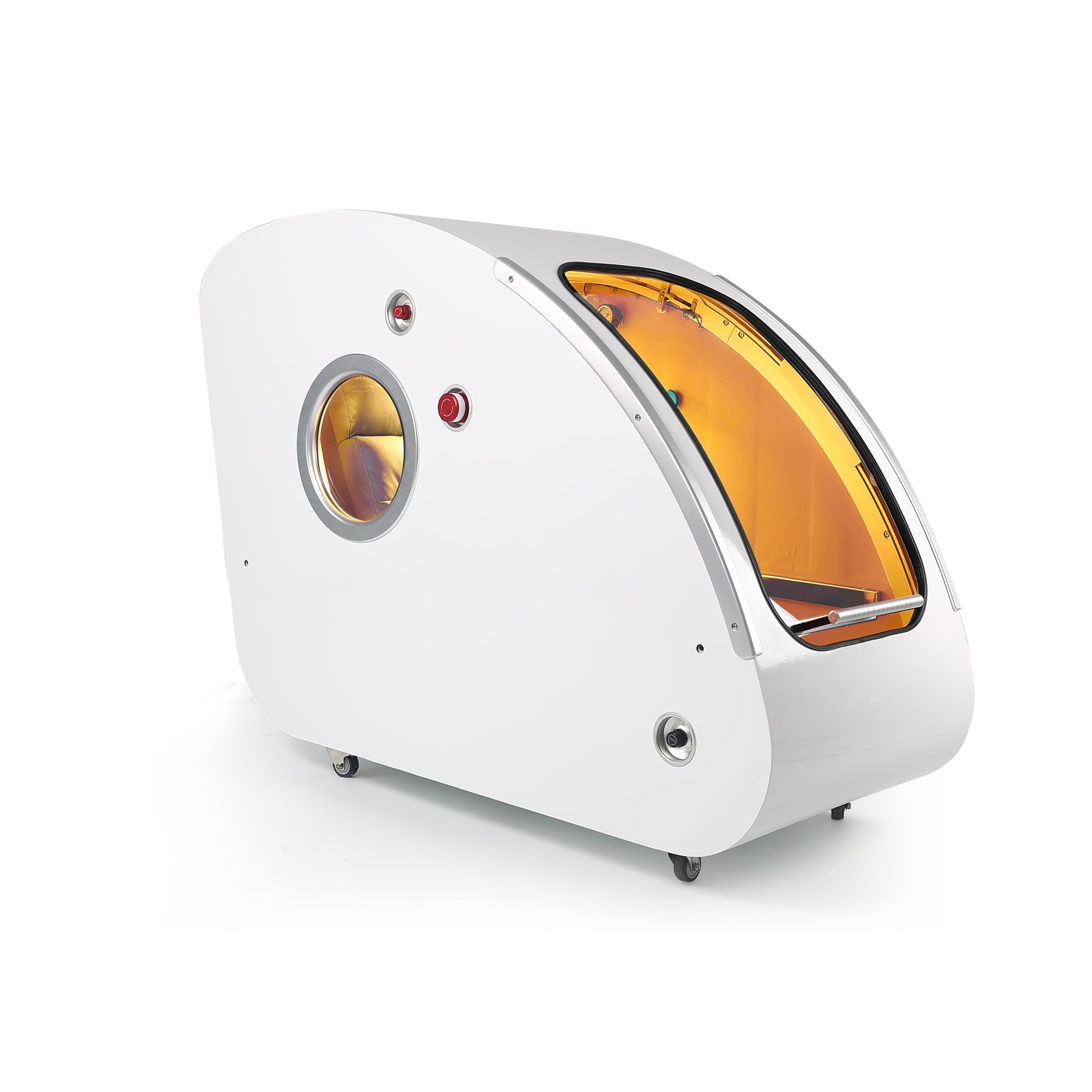
This is especially important when a buyer is comparing formats. A portable chamber, a seated design, a hard-shell cabin, and a larger professional system can lead to very different conversations about installation, operating procedures, training, and ownership. The OxyPrime chamber range gives a useful view of how different the physical formats can be. A product image is helpful, but a photo cannot establish the record, configuration, or instructions that apply to the exact chamber.
When a name or detail does not line up cleanly, ask for clarification in writing. There may be a simple explanation, such as a trade name or a model family. What matters is that the explanation leaves you with an accurate path from the proposed chamber to the documents that support it.
Read the clearance record in its proper scope
A 510(k) record is valuable, but it is not a complete ownership manual. It can confirm that a particular device passed through the clearance process, yet it does not automatically settle questions about the precise configuration, accessories, delivery setting, building conditions, or support terms in your proposal. Those details still belong in the supplier’s model-specific documents and the conversation around your intended space.
It is also important not to stretch a device record into a health claim. The FDA’s safety communication specifically emphasizes following the manufacturer’s instructions for each device, appropriate training, fire prevention, cleaning, maintenance, safety checks, and rules around potentially prohibited items. The direct takeaway for a buyer is straightforward: a record in a database should lead you toward better model-specific questions, not toward assumptions.
If the purchase relates to a medical condition, medication, symptoms, treatment goals, or personal suitability, step out of the equipment lane and speak with a qualified healthcare professional. O2 Chamber Hub can help clarify the physical system and the ownership plan. It cannot decide whether a particular person should use a chamber or replace clinical guidance.
Know what to do when the details do not line up
A mismatch does not always mean that something is wrong, but it should never be ignored. Perhaps the proposal uses a shorter trade name while the FDA record uses a fuller device name. Perhaps a chamber is described as part of a product family, while the record identifies a more specific model. Perhaps an accessory or configuration changes the description without changing the underlying device. Those can all have reasonable explanations. The buyer’s job is to ask for the explanation before treating the documents as settled.
Keep the question simple and specific: “Can you show me how the chamber in this proposal connects to this record and these instructions?” A well-prepared supplier should be able to answer without replacing the question with general reassurance. Ask for the model name as it appears on the paperwork, the relevant 510(k) number, and the manufacturer documentation that applies to the final configuration. Put those answers in the same folder as the proposal.
If the explanation depends on a point that belongs to another professional, name that boundary clearly. A building professional may need to advise on the physical setting. A qualified healthcare professional should address personal suitability and treatment questions. A legal or regulatory adviser may be appropriate for facility-specific obligations. Clear boundaries make the equipment conversation more useful, because no one is pretending that a product record answers every decision around it.
Ask for the documents that make ownership clearer
FDA verification works best as one part of a broader file. Ask for the manufacturer’s instructions for use, installation requirements, operating guidance, cleaning and maintenance information, training plan, warranty terms, and service process for the chamber being considered. Review whether the proposal explains what is included and which items depend on the final configuration or the physical setting.
The right set of documents will not look identical for every chamber or setting. That is why serious buyers should avoid generic checklists that pretend one answer fits every model. Instead, build a short record of the answers that apply to your intended equipment: what it is, where it will go, how it will be delivered, who will operate it, what instructions govern it, and how support works after delivery.
For a deeper look at the support and care questions that should sit beside the paperwork, see the hyperbaric chamber maintenance guide. For the room, access route, and placement questions that a database cannot answer, use the room-planning guide.
Use verification to make the comparison more useful
Document review should make a comparison clearer, not make it feel abstract. Once you can identify the exact chamber, you can ask better questions about what actually affects the ownership experience. Does the format work for the intended room? Is the delivery route realistic? Who will receive the operating information and training? How are cleaning, routine checks, maintenance, warranty, and service handled for this model?
That is a stronger process than comparing a few photographs or treating one headline specification as the whole story. A premium chamber decision has to hold together across the equipment, the property, the people responsible for normal operation, and the support available after delivery. The buyer checklist can help keep those questions in one place while you review a proposal.
For a professional or wellness setting, carry the same discipline into the facility plan. The commercial chamber consultation page outlines the practical questions around room fit, delivery, operating readiness, documentation, and support. Those questions do not replace separate clinical, local, or professional advice. They simply prevent an equipment decision from being made without the setting in view.
Bring a concise due-diligence brief to the consultation
A consultation is more productive when the buyer arrives with facts rather than only broad impressions. Bring the manufacturer and model information, the 510(k) number if it has been provided, a copy or link to the relevant FDA record, and any documents you have received. Pair that with basic room dimensions, photographs of the delivery route, and the practical constraints that matter to the setting.
- What is the precise chamber name and configuration being proposed?
- Which 510(k) record supports that device, and does it identify Product Code CBF?
- Which manufacturer instructions apply to the exact configuration?
- What does the chamber require from the planned room, delivery route, and normal operating environment?
- Who receives training, and where are routine procedures documented?
- What cleaning, maintenance, warranty, and service arrangements apply after delivery?
- Which questions need a qualified healthcare professional or other appropriately qualified adviser?
The aim is not to turn a purchase into an adversarial process. It is to make a significant decision feel properly grounded. Good documentation, clear answers, and a responsible support plan are signs that the conversation is being treated with the care it deserves.
How O2 Chamber Hub can help
O2 Chamber Hub offers consultation-led guidance for serious buyers considering a high-value hyperbaric chamber. We can help make the equipment, format, room fit, delivery route, documentation, training, warranty, and ownership-support questions clearer before a decision is made.
Start by reviewing the hyperbaric chamber facts page and the buyer safety guide. When you are ready to connect the documentation to a real setting and ownership plan, request a private consultation. Questions about clinical care, treatment, medication, or individual suitability should remain with a qualified healthcare professional.
Frequently asked questions
What does FDA-cleared mean for a hyperbaric chamber?
For a Class II hyperbaric oxygen therapy device, FDA clearance generally refers to the 510(k) process. It means the FDA found the device substantially equivalent to a legally marketed predicate device for its cleared use. It does not make every use, treatment claim, room plan, or operating situation automatically appropriate.
How can I check whether a specific hyperbaric chamber is FDA-cleared?
Ask for the manufacturer name, exact device name, and 510(k) number. Then search the FDA’s releasable 510(k) database using Product Code CBF, the 510(k) number, or the device name. Compare the result with the written documentation for the exact model and configuration being proposed.
Is a listing in a device database the same as FDA clearance?
No. Different FDA and device-information databases record different facts. A buyer should not treat a broad category label, a company name, or a general listing as proof that a particular model and configuration have the clearance being discussed. Ask for the 510(k) number and verify the record directly.
Can O2 Chamber Hub advise on medical suitability or treatment claims?
O2 Chamber Hub can help clarify equipment, room fit, delivery, documentation, training, warranty, and ownership support. Personal health, treatment, medication, clinical protocol, and suitability questions require a qualified healthcare professional.
Continue Reading
Related posts

Chamber Guides
What Is a Hyperbaric Oxygen Chamber?
A plain-English introduction to hyperbaric oxygen chambers, the differences buyers should understand, and the questions that deserve careful answers.
Read the guide →
Chamber Guides
Hyperbaric Chamber Safety: What Buyers Should Ask
A practical buyer’s guide to the safety questions, documentation, training, and support worth confirming before choosing a hyperbaric chamber.
Read the guide →
Chamber Guides
How Much Does a Hyperbaric Chamber Cost?
Compare OxyPrime chamber prices from $8,499 to $129,000, plus delivery, warranty, and the practical details that shape your total budget.
Read the guide →
Chamber Guides
Hard Shell vs. Soft Shell Hyperbaric Chambers
A practical comparison of construction, cabin experience, access, planning, and ownership questions for serious hyperbaric chamber buyers.
Read the guide →